
Last updated November 22, 2026
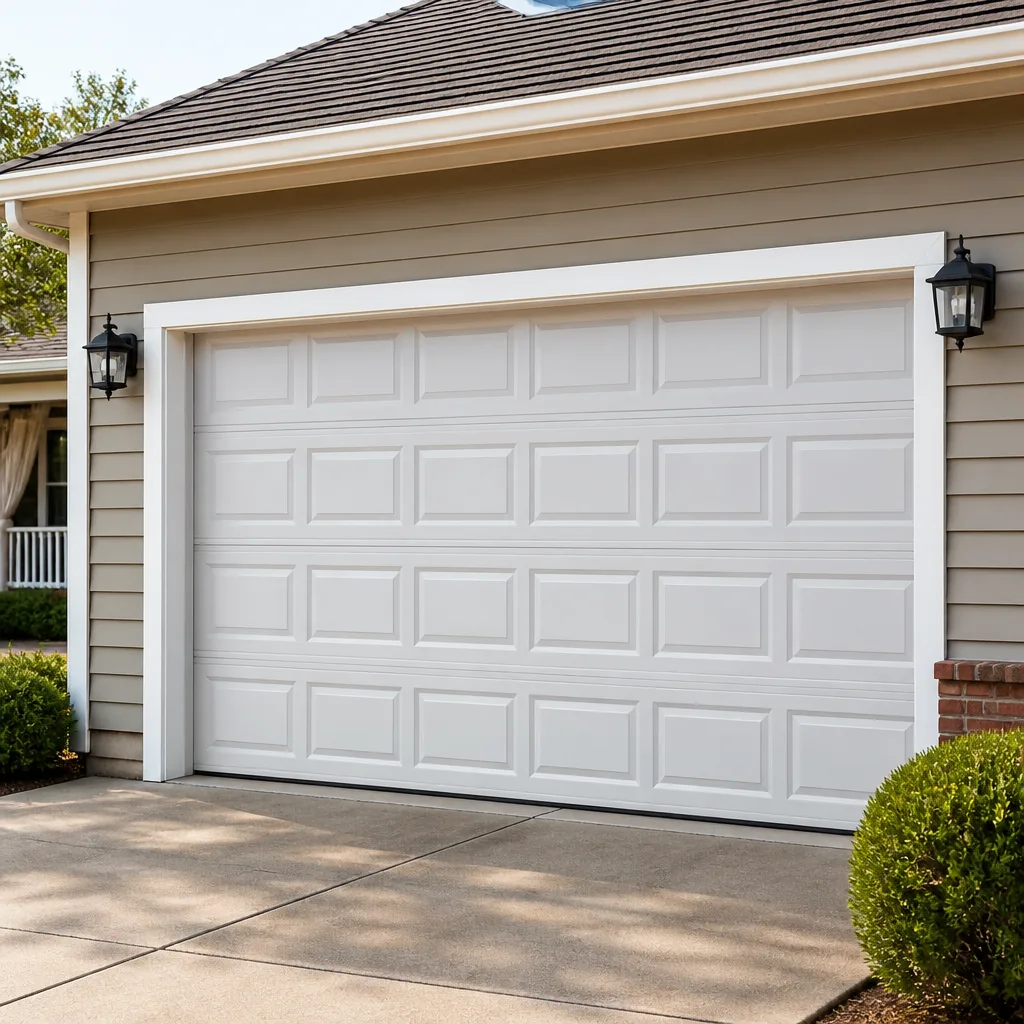 Raised-panel steel
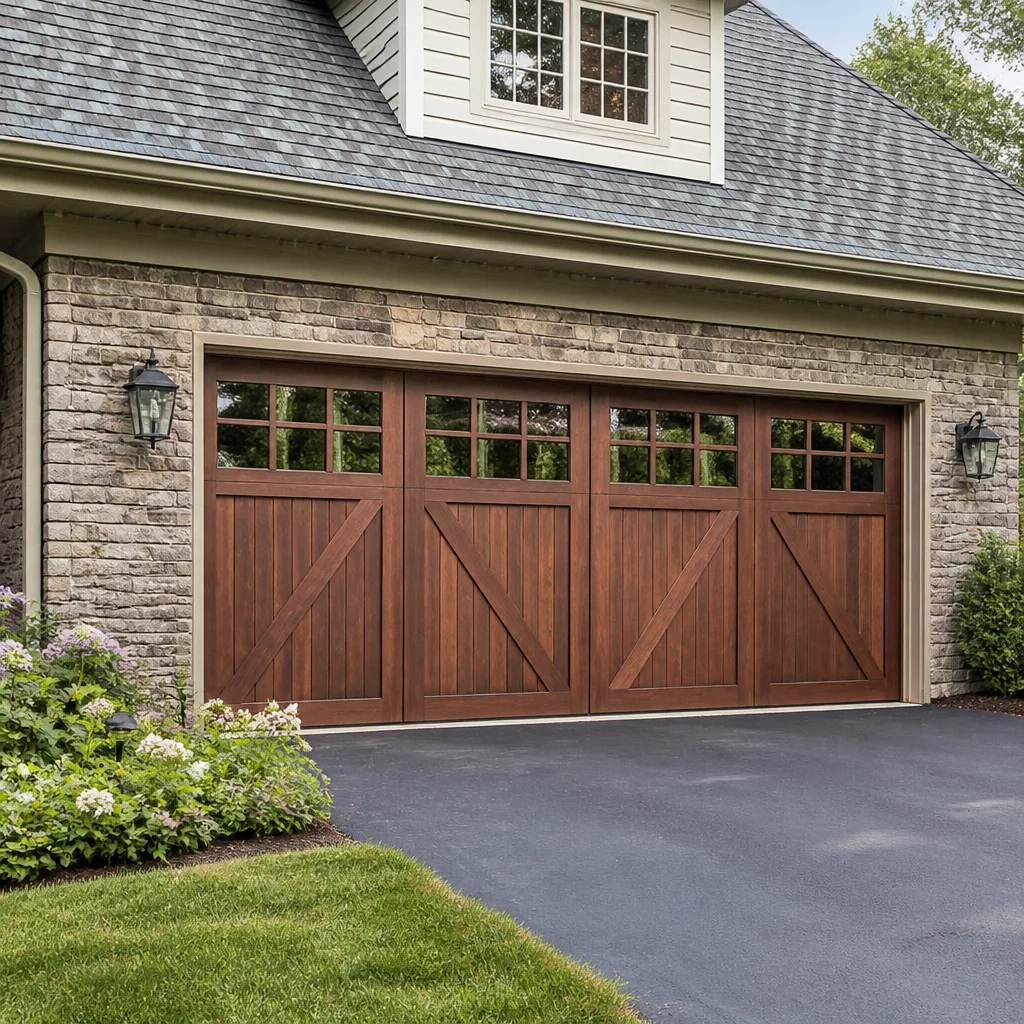 Carriage house
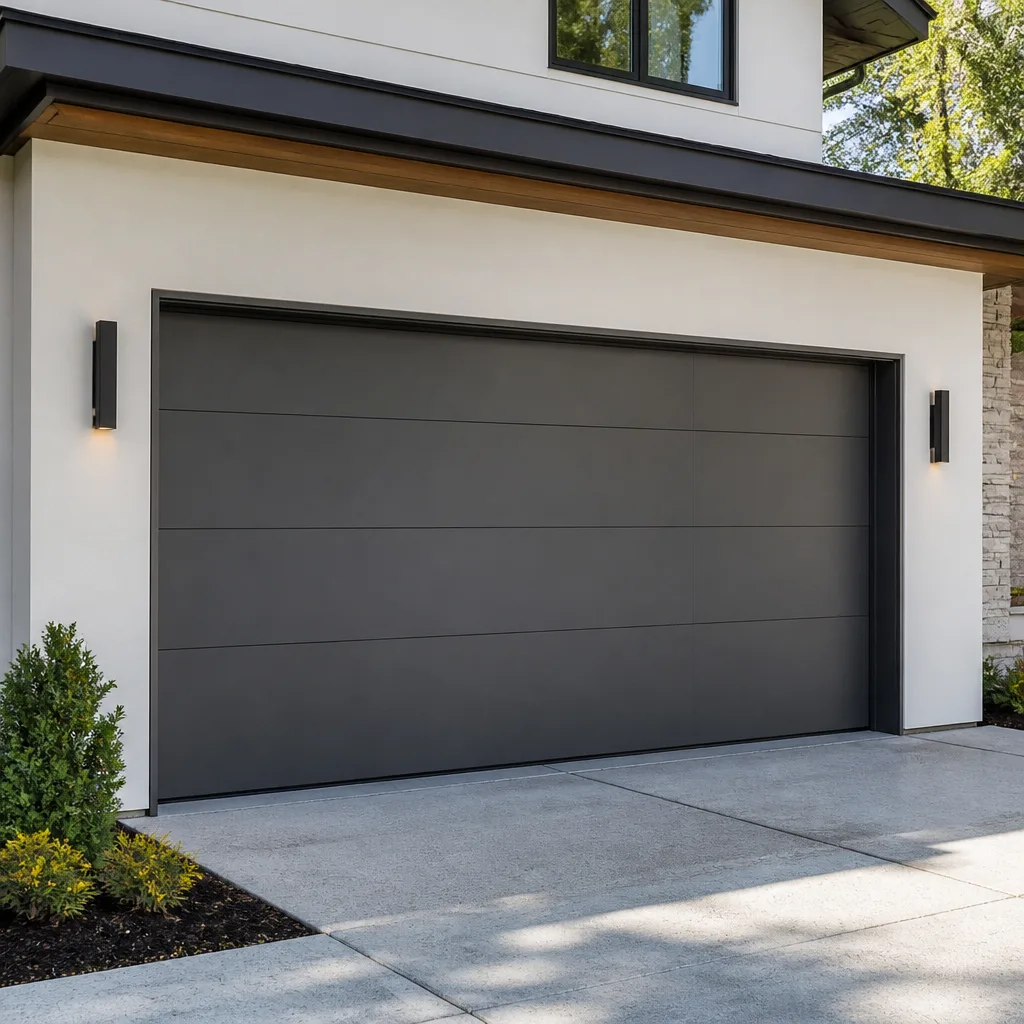 Modern flush
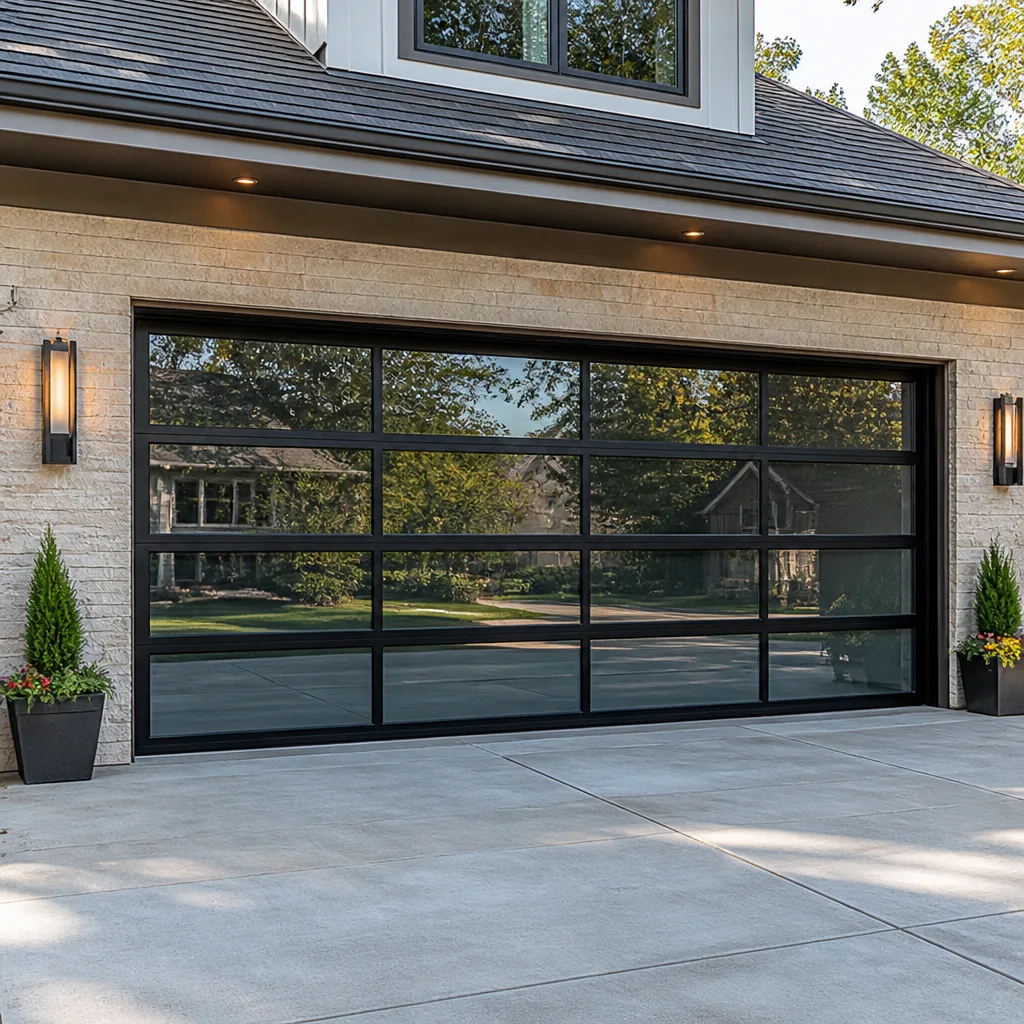 Full-view glass
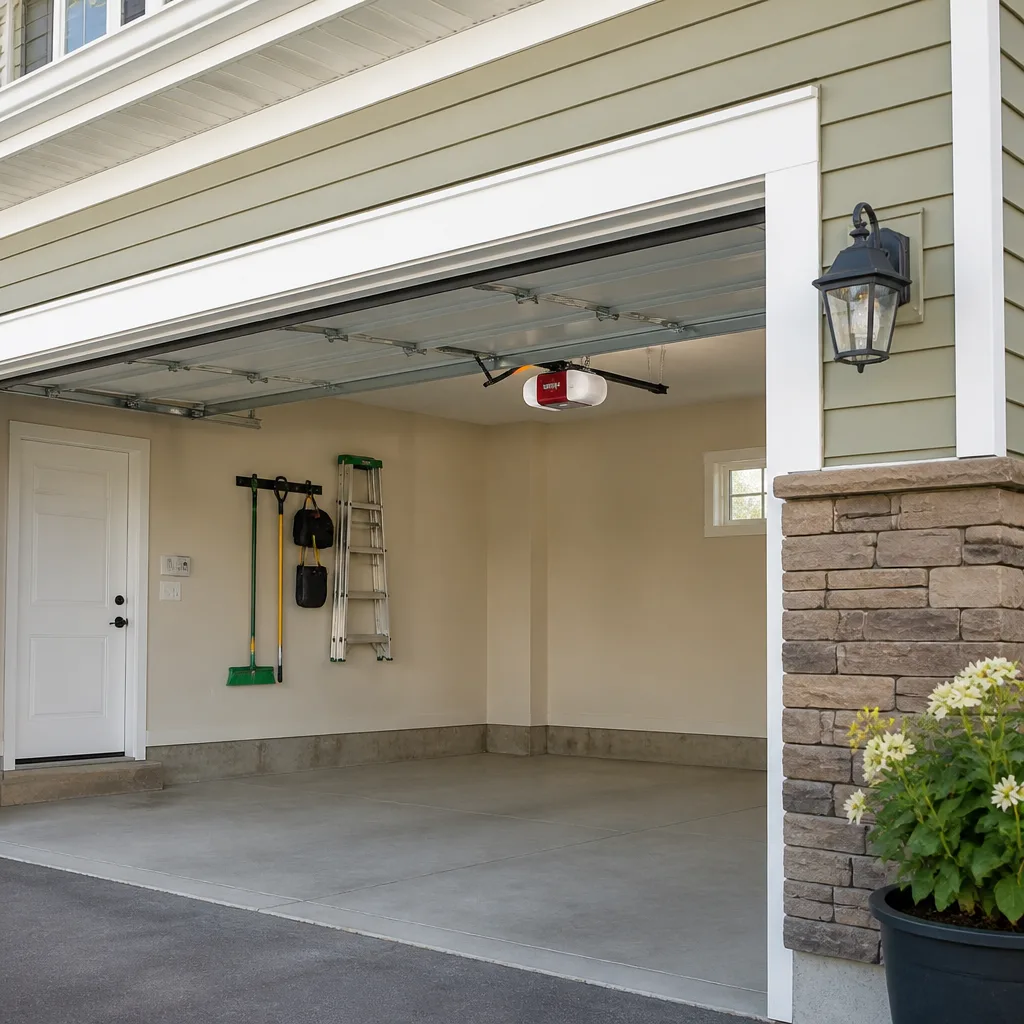 LiftMaster openers
 Chamberlain openers
Full 25-point door and opener safety check with every visit - springs, cables, rollers, tracks, and your LiftMaster or Chamberlain opener included
You get a price before we start. It does not change when the pro arrives.
Get your free estimateGarage Door Warning Signs: A Brentwood Homeowner’s Reference Guide
A garage door that takes two seconds longer to open than it did six months ago isn’t aging gracefully. It’s telling you a specific component is under abnormal load, and that component has a predictable failure timeline. Most Brentwood homeowners have been trained to ignore slow-developing changes: the door still opens, the car still gets out, so nothing is wrong. That’s the misconception this guide corrects. A garage door broadcasts failure long before it fails, but the signals are mechanical rather than obvious. Below we translate the sounds, movements, and visual cues you’re hearing and seeing into their underlying causes, so you can act on a warning instead of reacting to a breakdown.
Quick Answer
Garage door warning signs worth acting on include grinding, squealing, or popping sounds, uneven or jerky travel, visible gaps between door sections, sagging panels, and a door that reverses before closing. Each signal points to a specific component – rollers, springs, cables, hinges, or the opener – and the response window differs: cosmetic noise can be scheduled, while popping springs, hanging cables, or an off-track door need same-day service to avoid a stuck or dangerous door.
Styles & brands we work with
- Raised-panel steel
- Carriage house
- Modern flush
- Full-view glass
- LiftMaster openers
- Chamberlain openers
Table of Contents
- Sound-to-Cause: What Grinding, Squealing, and Popping Actually Mean
- Visual Asymmetry: Gaps, Sag, and Uneven Travel
- Opener Strain vs. Mechanical Resistance: Which Trade Do You Call?
- Response Time Benchmarks: Schedule vs. Same-Day
- The Cascade Failure Pattern and Where to Interrupt It
- Brentwood Context: Climate, Housing, and Daily Cycling
- Seasonal Checks for Long Island Doors
Sound-to-Cause: What Grinding, Squealing, and Popping Actually Mean
Sound is the fastest diagnostic tool a homeowner has, and the type of noise narrows the failing component before anyone touches the door. Grinding is friction metal-on-metal, usually worn rollers or a dry torsion tube. Squealing is high-pitched vibration, most often dry hinges, rollers, or a lack of lubrication at the pivot points. Popping is different in kind: a single hard pop usually means a torsion spring has broken, and a repeated pop during travel points to a binding panel or a roller jumping its track. In our experience, the sound tells the story before the inspection does.
Here’s how to map what you hear to what’s likely wrong:
- Grinding, continuous during travel: Worn steel rollers, a dry torsion shaft, or debris in the track. Serviceable, but worn rollers eventually score the track.
- Squealing or high-pitched whining: Lack of lubrication at hinges or rollers. Usually the cheapest warning sign to correct and the one most often ignored.
- A single loud pop from above the door: A broken torsion spring. Stop using the door. This is a same-day call.
- Repeated popping or cracking during travel: A panel binding against the jamb, a bent hinge, or a roller riding outside the track curve.
- Rattling or clunking: Loose fasteners, worn hinge plates, or a loose opener rail bracket.
One caution: any noise that comes from the springs or the cables is a noise you investigate from the ground, not by hand. Torsion springs and the cables under tension are the two most dangerous parts of the system, and we handle those with proper winding bars and training. If you hear a pop, don’t try to lift the door manually to test it. Call for garage door spring repair and stay off the door until a technician has looked at it.
Visual Asymmetry: Gaps, Sag, and Uneven Travel
A door that closes but doesn’t sit square is telling you a cable, spring, or track has shifted, and the size of the gap tells you how urgently. Small, even gaps between sections are normal in a sectional door. A widening gap at one end, a panel that sags below its neighbor, or a door that lands unevenly on the floor is not. These are signs of unequal tension between the two sides of the door, and unequal tension is how a door jumps its track.
You can measure the basics from the ground without tools:
- Look at the horizontal gap between panels. Even gaps all the way across are within tolerance. A gap that tapers from one side to the other means the panels are out of alignment.
- Look at the bottom seal against the floor. Contact across the full width is correct. Daylight under one corner, or a seal that touches the floor in the middle and lifts at the edges, points to a cable or spring imbalance.
- Watch a full open-and-close cycle. The door should travel at a steady speed and stop level. A door that hesitates, jerks, or visibly tilts during travel is out of tolerance.
- Check the vertical tracks with a straight edge or a level. A track that bows outward at the top is a common cause of rollers jumping the curve.
- Inspect the cables at the bottom corners. A cable with a frayed spot, a kink, or a strand poking out is a same-day call.
What’s within tolerance versus what needs service: a single dry hinge is a maintenance item. A door that lands unevenly is not. In our experience, a homeowner who notices the uneven landing and calls early avoids the track jump that comes next. For a door that’s already off its track, that’s garage door repair, and it’s not a job to attempt with a pry bar.
Opener Strain vs. Mechanical Resistance: Which Trade Do You Call?
An opener that strains is almost always fighting mechanical resistance, not failing electrically, and that distinction decides who you call. An opener has a fixed amount of lifting force. When the door’s rollers, springs, or track add resistance, the opener works harder, runs hotter, and eventually trips its safety reverse or burns out a gear. If the door lifts easily by hand (carefully, with the opener disengaged) but the opener struggles, the problem is mechanical. If the door moves freely but the opener won’t respond, the problem is the opener or its controls.
Signs the opener is the problem, not the door:
- The door moves easily by hand but the opener doesn’t respond to the remote or wall button.
- The opener’s light flashes in a pattern, or the unit beeps and reverses immediately.
- The door opens partway and stops at the same point every time, but the track is clear.
- The remote works from close range only, or the wall button works while the remote doesn’t.
Signs the door is the problem, not the opener:
- The opener grinds or strains audibly while the door moves slowly.
- The door reverses itself, or the safety sensors trip, when nothing is in the way.
- The opener motor runs but the door doesn’t move, which points to a stripped gear or a broken spring.
When the evidence points to the opener, that’s garage door opener repair. Our technicians work on LiftMaster, Chamberlain, and Genie units, among others, and can test the unit’s force settings and travel limits before recommending a replacement. When the evidence points to the door, the opener is fine and the door needs service.
Response Time Benchmarks: Schedule vs. Same-Day
Not every warning sign needs same-day service, and knowing which is which saves you a stuck door and a disrupted morning. The rule of thumb is simple: signs that affect the door’s balance, its spring tension, or its track position need same-day attention. Signs that affect comfort or noise can be scheduled.
Schedule an appointment for these:
- Squealing or mild grinding during travel with a door that otherwise works normally.
- A single dry or noisy hinge, or a loose handle or bracket.
- A remote that works inconsistently, or a keypad that needs reprogramming.
- Weatherstripping that’s worn at the bottom of the door.
Call for same-day service on these:
- A single loud pop from above the door, which signals a broken spring.
- A door that’s off its track, tilted, or hanging from one side.
- A cable that’s frayed, kinked, or visibly slack.
- A door that reverses at the floor for no reason, or that won’t close at all.
- An opener that runs but the door doesn’t move.
For the same-day list, call (833) 348-8658. We answer 24/7. Fast dispatch from 7am to 7pm, Sunday through Friday. A call outside dispatch hours is booked into the next opening. On Long Island, a door stuck open overnight is a security problem as much as a mechanical one, so we treat it that way.
The Cascade Failure Pattern and Where to Interrupt It
Garage door failures rarely happen in isolation. They cascade, and the cascade has a predictable shape: an ignored cable fray leads to an unequal lift, which leads to a track jump, which leads to a bent panel and sometimes a broken spring. Each step in the chain costs more than the one before it. The place to interrupt the cascade is at the earliest visible sign, not at the first loud noise.
Here’s the chain, in order, and the cheapest place to break it:
- A cable starts to fray at the drum. The door still works. This is the cheapest intervention point.
- The door lifts unevenly because one side is losing tension. Now the track and rollers are under load they weren’t designed for.
- A roller jumps the track curve. The door binds, the opener strains, and the panel starts to twist.
- A panel bends or the door comes off the track. Repair now involves panel replacement and track work.
- The spring takes the strain of a bound door and snaps. The door is now inoperable and a safety hazard until the spring is replaced.
In our experience, the single most common cascade we see in Brentwood starts with a homeowner who noticed grinding months earlier and scheduled the repair after the door stopped moving. Interrupting the chain at step one or two usually means roller and cable work. Interrupting it at step four or five usually means springs, panels, and a track adjustment. The window between them is measured in weeks, not months.
If you’re already at step three or four, that’s an emergency call. Brentwood Garage Door Repair Pros offers emergency garage door service for a door that’s stuck, off its track, or hanging from one spring. Call (833) 348-8658.
Brentwood Context: Climate, Housing, and Daily Cycling
A garage door’s warning signs show up against a specific local backdrop, and in Brentwood that backdrop is a four-season climate with freezing winters, humid summers, and a housing stock of homes with attached garages that get used as the primary entry. Cycles matter more than anything else. A door that opens and closes a dozen times a day accumulates wear faster than one used twice, and most Brentwood households use the garage door as the front door, which shortens the life of rollers, springs, and hinges.
Winter is the season that exposes warning signs you didn’t know you had. Cold temperatures stiffen lubricant, which turns a mild squeal into a grind, and frozen ground at the bottom seal can make a door reverse at the floor. Summer humidity loosens wood framing and can cause a track to shift if the fasteners were already loose. Both seasons amplify a door that was already borderline, which is why a fall inspection is the practical way to catch the problems before the cold does.
If you’re near the Brentwood Long Island Rail Road station or anywhere in the neighborhoods south of the LIE, we treat a stuck door as a security call. Our Brentwood Garage Door Repair Pros team specializes in garage doors only, which means the technician who arrives has spent their working life on tracks, springs, and openers, not on a mix of trades. If your door has been making noise for a season and you’ve been putting it off, that’s the sign to book now instead of after the first freeze.
Seasonal Checks for Long Island Doors
A ten-minute visual and listening check each season is the cheapest maintenance a garage door gets. You don’t need to disassemble anything. You’re looking and listening, and you’re noting what’s changed since the last check.
- Listen to a full cycle. Any new noise – grinding, squealing, or popping – is a note to make.
- Watch the door travel. It should move at a steady speed and land level.
- Check the bottom seal against the floor. Contact should be even across the width.
- Look at the springs above the door. A visible gap in a torsion spring or a stretched extension spring is a stop-use signal.
- Look at the cables at the bottom corners. Fraying or kinks are a same-day call.
- Test the safety reverse. Put a small object in the door’s path and confirm the door reverses on contact.
- Lubricate hinges and rollers with a garage-door lubricant, not WD-40. Do this from the ground, with the door closed.
For a door you’re unsure about, a free estimate from a specialist is cheaper than a panel replacement. Our technicians have up to 9 years of experience, and we work on equipment from Raynor and LiftMaster alongside the other major brands. Call (833) 348-8658.
Common Mistakes to Avoid
- Ignoring a pop because the door still opens. A broken spring can allow the door to move a few cycles before it fails hard, and the next failure is often a dropped door. Treat the pop as a stop-use signal and get it looked at.
- Lubricating the tracks. Tracks are meant to be dry. Lubricant in the track collects grit and causes the rollers to slide instead of roll, which is the opposite of what you want.
- Adjusting the spring tension yourself. Torsion springs carry enough stored energy to cause serious injury, and the tools and technique matter. This is a professional job, always.
- Calling an electrician for a door that’s binding. A door that strains after a cold snap is usually a mechanical problem, not an electrical one, and an electrician will tell you the same thing after the call-out.
- Pulling the manual release while the door is under tension. On a door with a broken spring or a bound cable, the release can drop the door hard. Check with a technician before pulling it.
- Waiting until the door won’t close. The cheapest repair is the one you schedule at the grinding stage. Waiting past that turns a roller swap into a panel replacement.
- Using a hardware-store roller as a permanent fix. A cheap roller will wear out faster than the rest and start the same grind again. If you’re replacing, replace the set.
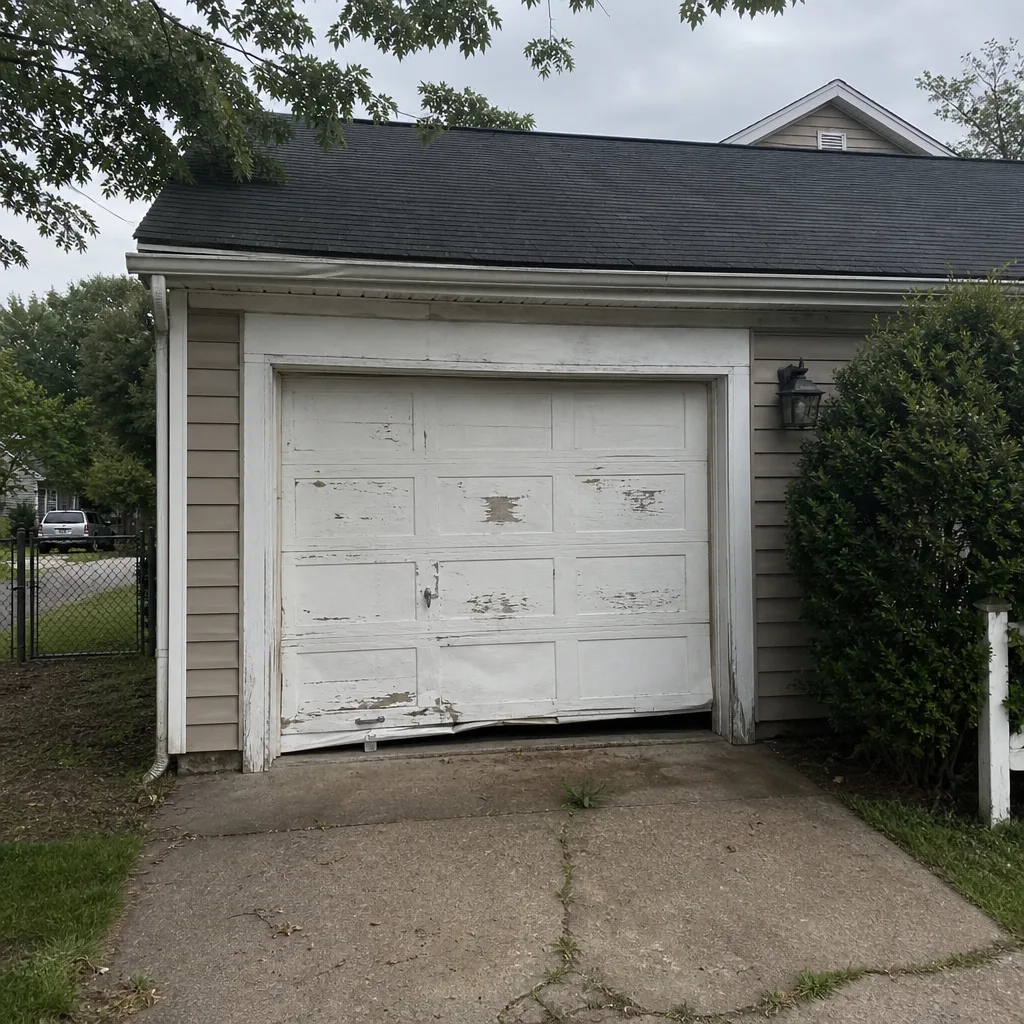
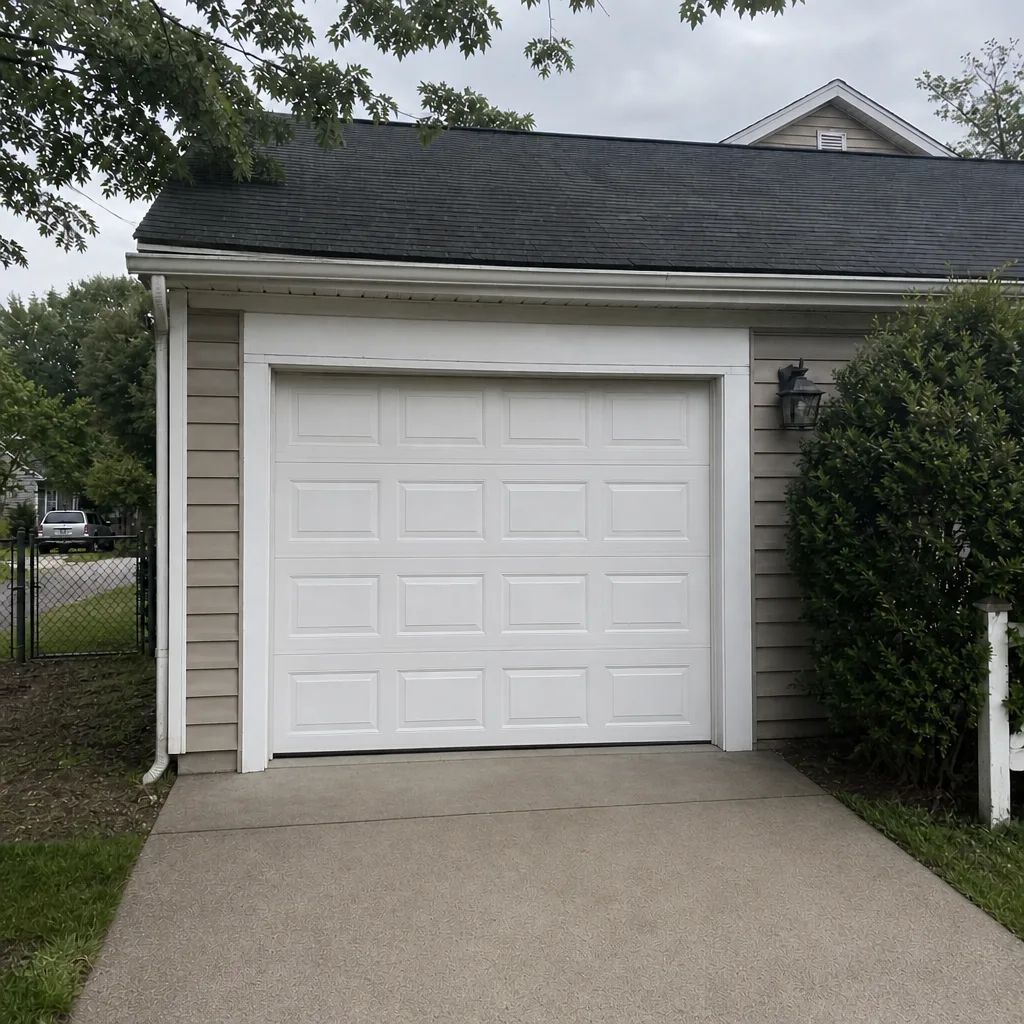
See the difference
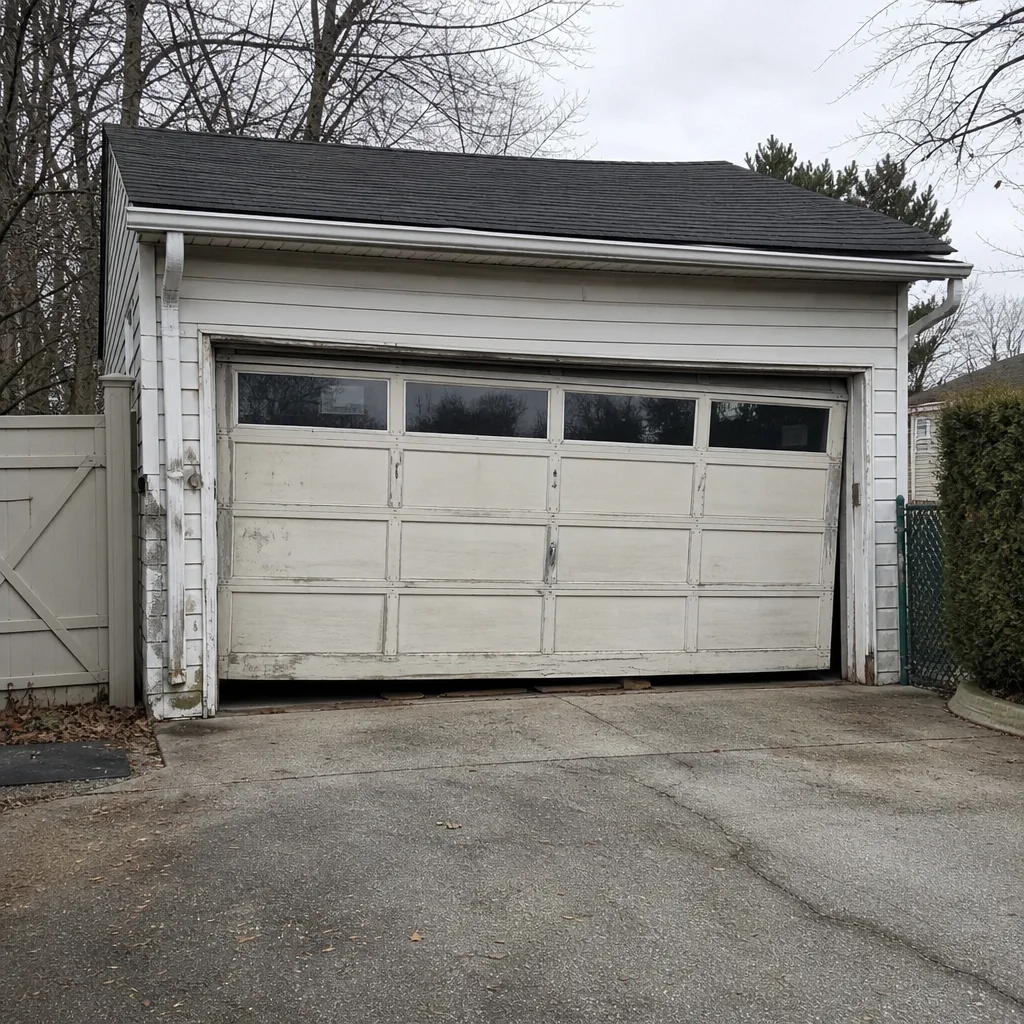 Before
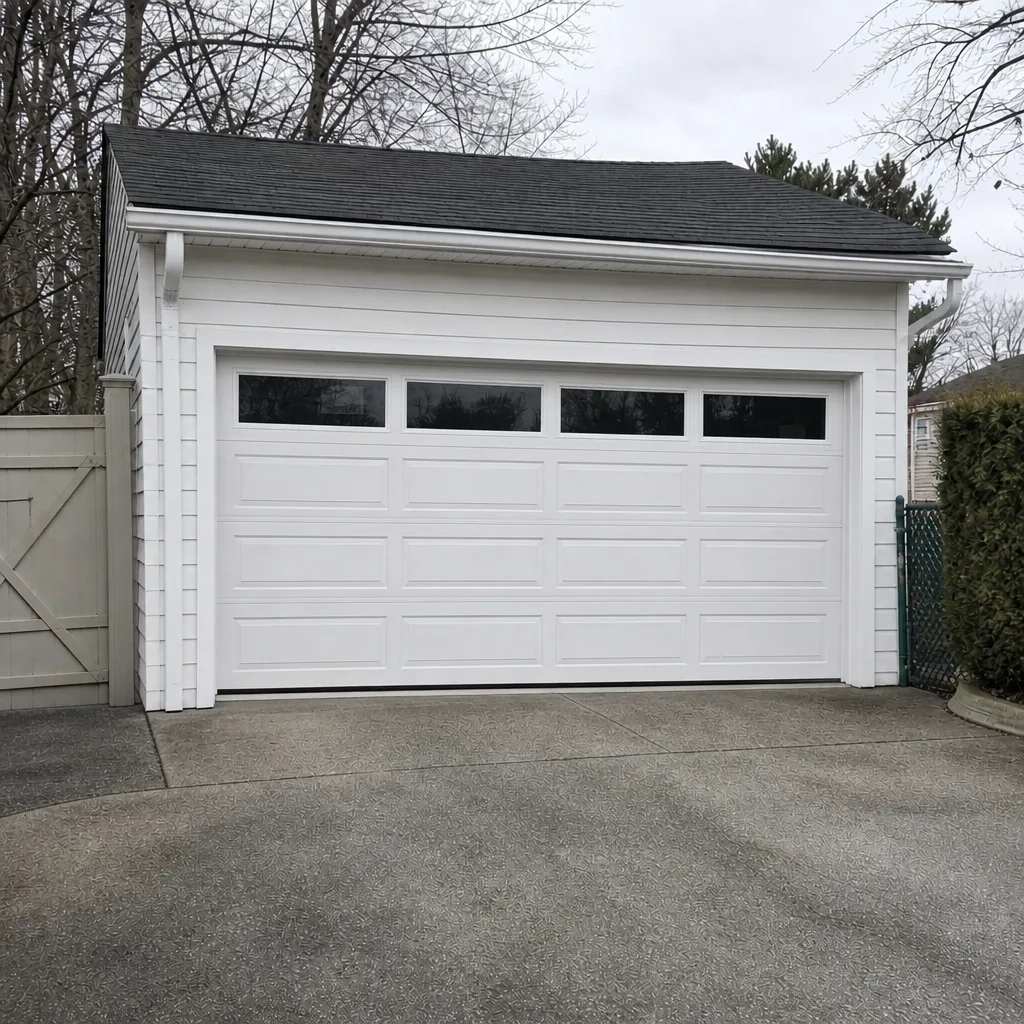 After
 Before
 After
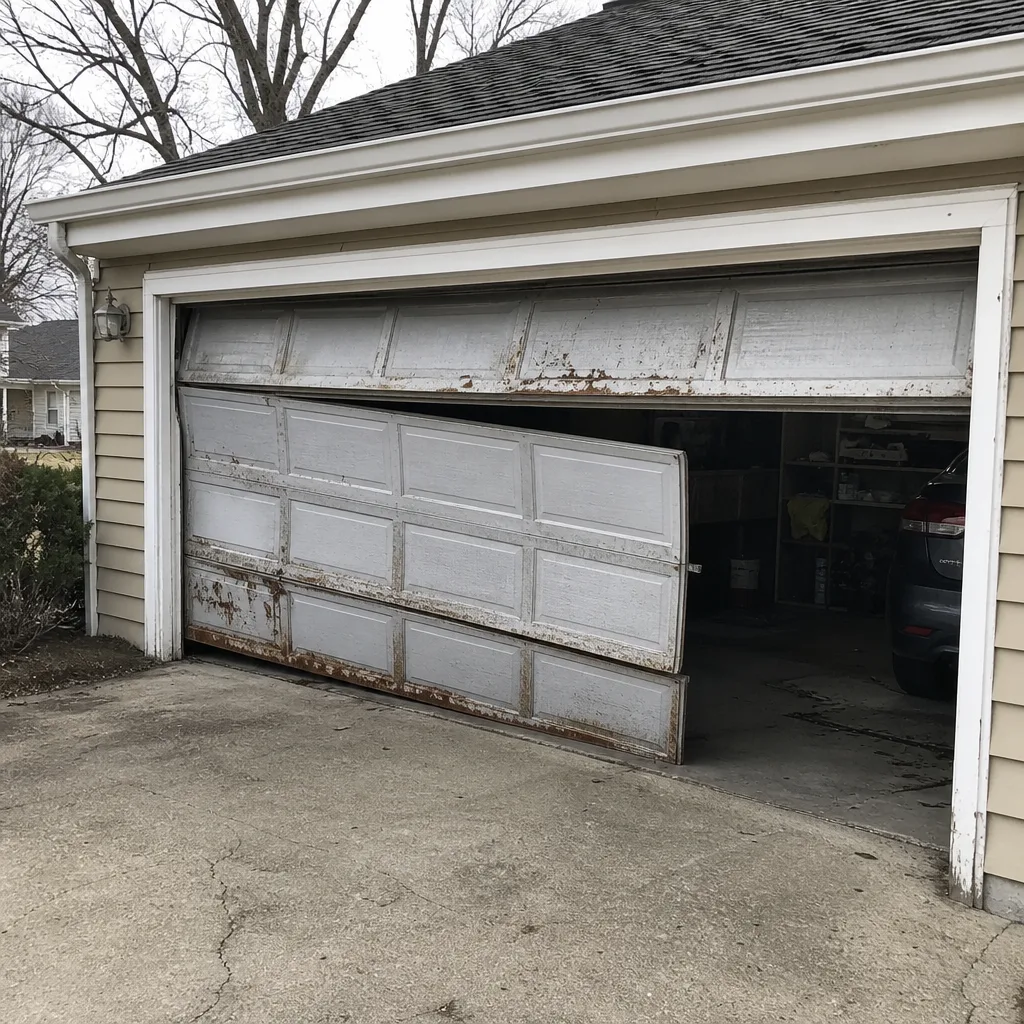 Before
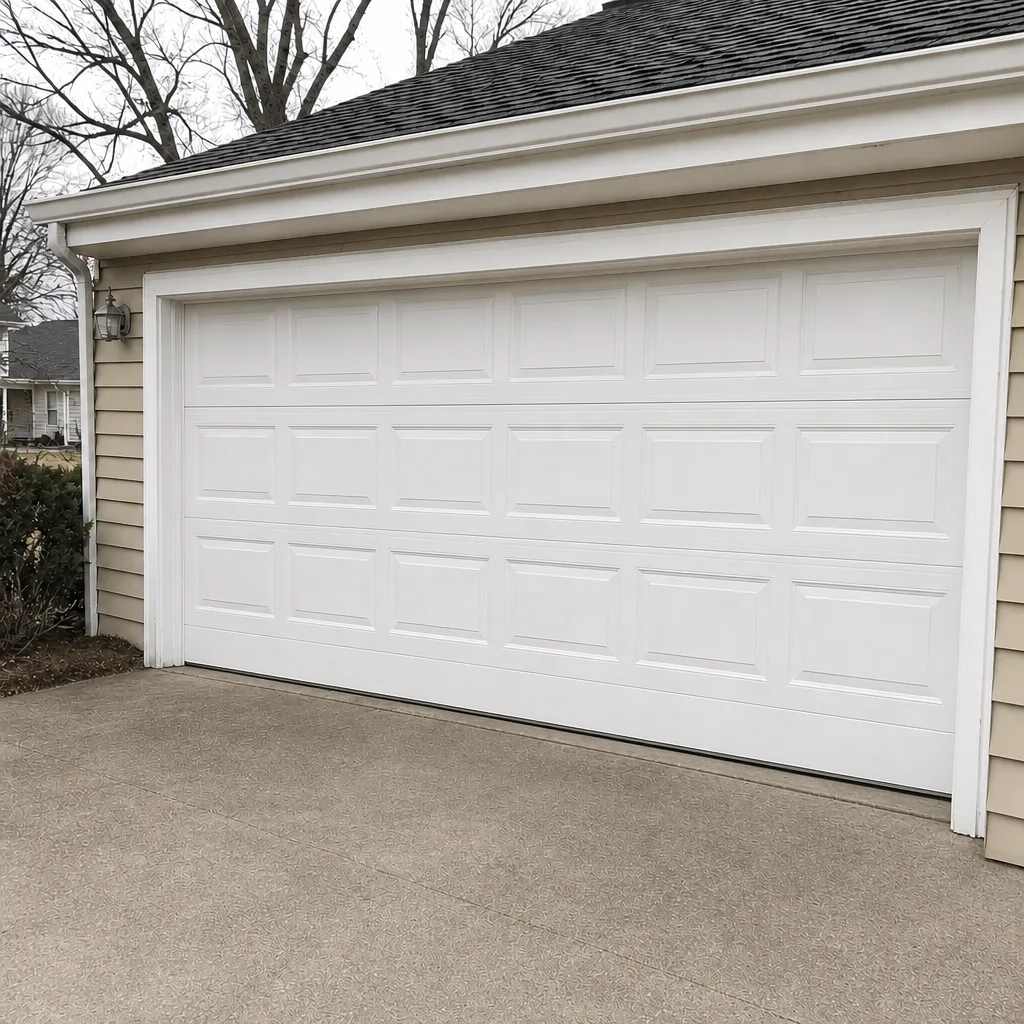 After
When to Call a Professional
Call a professional when the sign touches the springs, the cables, the track, or the door’s balance. That covers a pop from above the door, a door that’s off its track or hanging on one side, a cable that’s frayed or slack, a door that reverses at the floor for no reason, and an opener that runs without moving the door. Call us if you’ve heard grinding for more than a few cycles, or if the door lands unevenly at the floor. Brentwood Garage Door Repair Pros offers free estimates in Brentwood – call (833) 348-8658. We answer 24/7, with fast dispatch from 7am to 7pm, Sunday through Friday, and the written estimate sets the price before any work starts.
Frequently Asked Questions
The first sign is usually a change in sound – grinding, squealing, or a repeated pop during travel – before anything visibly breaks. Because the change is gradual, the sound is often noticed for weeks before the door stops working. If you’ve heard it, that’s the time to have it checked, not the day the door stops moving.
A broken torsion spring usually announces itself with a single loud pop from above the door, and the door becomes too heavy to lift by hand. You may also see a gap in the spring coil or a loose extension spring hanging on one side. Stop using the door and call a professional for spring repair; this is not a DIY job.
Sometimes, if the cause is a dry hinge or a worn roller you can replace from the ground, and the door is not off its track or under abnormal tension. If the grinding comes from the springs, the cables, or the torsion shaft, call a professional. The DIY line is at the spring, not the hinge.
Schedule the repair within a few weeks if the door still travels smoothly and lands level. If the noise is accompanied by uneven travel, a gap between panels, or a strained opener, don’t wait – those are signs of a component under abnormal load, and the next failure in the chain is more expensive.
A door that reverses before closing usually has a misaligned safety sensor, debris in the door’s path, or a track problem that makes the door bind near the floor. It can also be a sign of a cable or spring imbalance if the door lands unevenly. Test the sensors first, then call if the reverse continues with a clear path.
Yes. Brentwood Garage Door Repair Pros offers emergency garage door service for a door that’s stuck, off its track, or hanging on a broken spring, because a door stuck open is a security problem as well as a mechanical one. Call (833) 348-8658. We answer 24/7. Fast dispatch from 7am to 7pm, Sunday through Friday, and every price is set by a written estimate before work starts.
The Bottom Line
Your garage door tells you what’s failing before it fails, and the signals are mechanical: grinding, squealing, popping, gaps, sag, and uneven travel. The type of noise narrows the component. The type of gap tells you how urgent it is. Spring, cable, and track signs need same-day attention, while noise and opener quirks can be scheduled. The cascade from a frayed cable to a bent panel to a broken spring is predictable, and it’s cheapest to interrupt at the first sign. If you’re in Brentwood and something has changed about the way your door sounds or moves, that’s the moment to book. Call (833) 348-8658 – the estimate is free, and the written quote is the price.
Written by the team at Brentwood Garage Door Repair Pros.