
Top Signs You Need Garage Door Service – Don’t Ignore These
Most homeowners call us when the door won’t open. By that point, the failure has been building for weeks. The real signs of garage door trouble show up quietly and early: a door that runs a little slower, drifts when you let go, or shudders on the way down. If you’re in Brentwood and something feels off, call (833) 348-8658. We answer 24/7, and our estimates are free. This post covers the signals that matter so you can schedule service instead of waiting for an emergency.
Key Takeaways
- A garage door that opens perfectly but runs a few seconds slower than it did months ago is fighting increased mechanical resistance – the opener is working harder and telling you it will fail.
- The 20-second balance test reveals spring wear before any noise or visible damage appears.
- Two inches of drift on a door you stop mid-travel points to a specific spring or cable problem.
- Worn rollers and hinges can look fine and still be weeks from failing – check them by eye, not by ear.
- Brentwood’s salt air corrodes springs, cables and hinges faster than inland climates, so inspection intervals here should be tighter.
1. Your Opener Runs Longer Than It Used To
This is the single most predictive warning sign, and almost nobody measures it. A door that opens perfectly but takes three seconds longer than it did six months ago isn’t “getting old.” It’s a motor working harder against increased mechanical resistance, and it’s telling you exactly when it will fail.
You don’t need a stopwatch. Pick a moment each month and count “one Mississippi, two Mississippi” from the instant the door starts moving until it fully opens. Write it down. If the count creeps up over a few months, you have real data – not a feeling – that something is binding. Typical causes in Brentwood homes we look at:
- Dry or worn rollers adding friction along the track
- A torsion spring that has lost tension and is lifting less weight than before
- Hinges that are binding or have worn bushings
- A track that has shifted slightly out of plumb
- An opener that’s approaching the end of its service life and struggling under a load it used to handle easily
Here’s the good news. When the cause is something like a worn hinge or a stiff roller, it’s a small repair you schedule on your terms. When it’s the spring, replacing it before it snaps is far simpler and safer than dealing with a door that’s stuck crooked in the opening. That’s the whole point of watching for early signs – you get to choose the timing. We work on Genie and Clopay equipment regularly, so if either brand is on your door, we’ll know exactly what to check.
2. The Balance Test: Spring Wear You Can Catch Before It Fails
A spring on its last legs often makes no sound and shows no visible crack. The balance test catches it anyway. Here’s how it works:
- Close the door fully.
- Pull the manual release cord to disconnect the opener.
- Lift the door by hand to about halfway, then let go.
- Watch what happens.
A healthy door should stay put wherever you release it, or drift less than an inch either way. If it drops faster than a few inches or races down toward the floor, the springs aren’t carrying their weight anymore. That’s the 20-second check that tells you about spring wear before any audible or visible symptom appears.
One caution: this test is for the balance check only. Do not attempt to tighten, adjust, or replace torsion springs yourself. High-tension springs store enormous force. When they let go without the right tools and training, they cause serious injuries, and the danger is real. Our technicians have up to 9 years of experience with garage door spring repair, and we recommend handing spring work off to a trained professional every time.
3. Your Door Drifts When You Stop It Mid-Travel
Drift is different from the balance test in one important way. If you stop a door manually and it slides down two inches before settling, that’s a tell. A two-inch drift indicates that one spring has lost tension relative to the other, or that a cable has stretched or slipped off its drum.
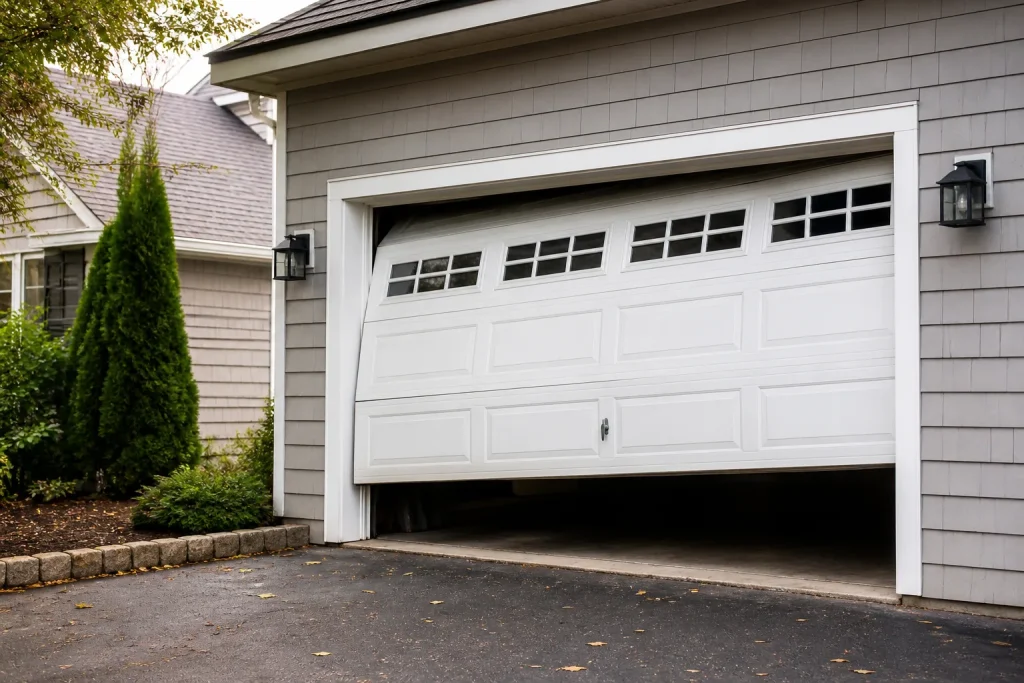
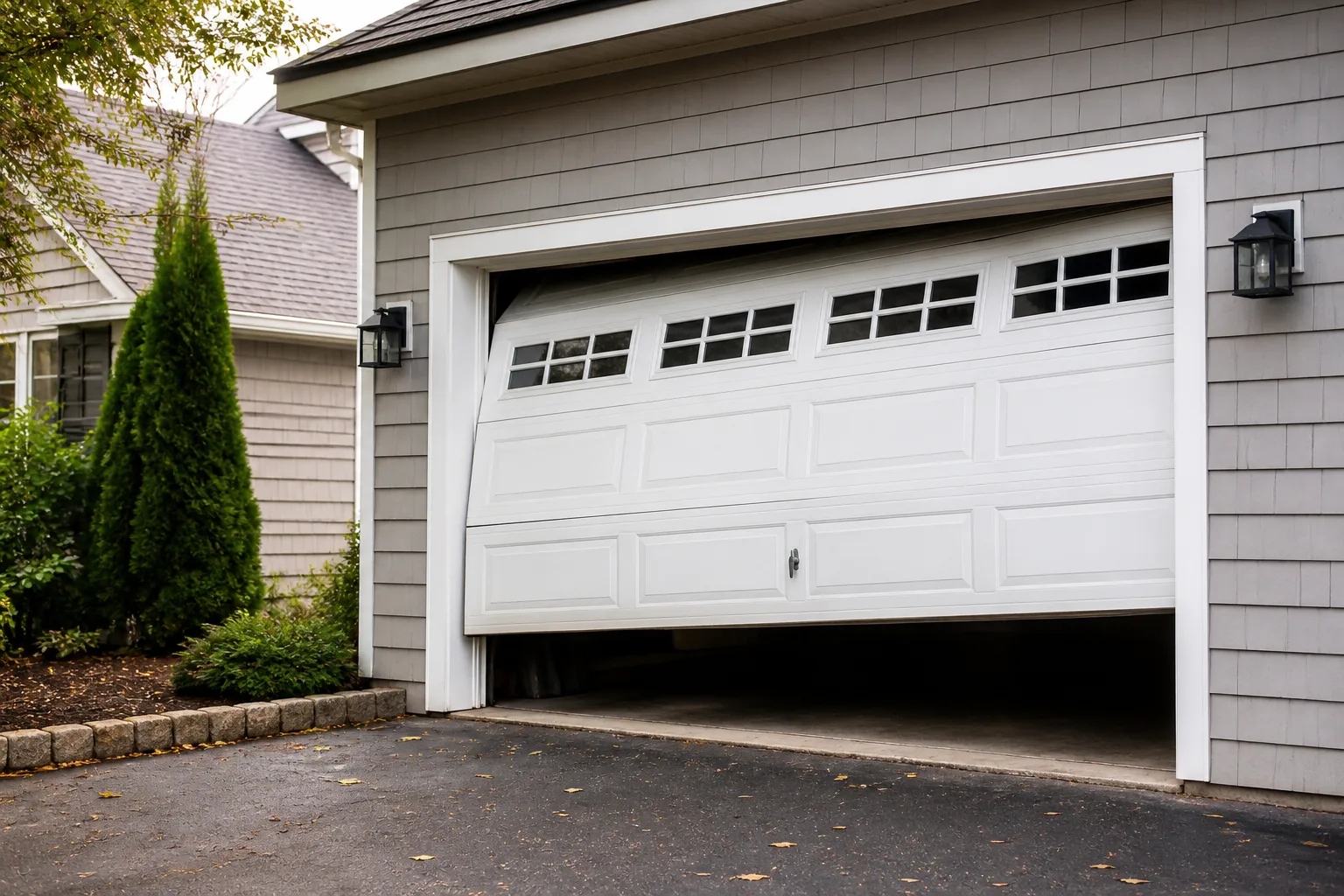
On a two-spring system, unbalanced tension is the most common cause. The door still opens. It still closes. It almost always sounds normal. But the springs are now working unevenly, which accelerates wear on both of them and puts extra strain on the opener’s drive gear. Left alone, the weaker spring typically fails first, and that failure is what most people eventually notice – the loud bang and the crooked door.
The drift test at home takes seconds: raise the door to chest height, stop, release. If it moves more than an inch, the door is out of balance. Cable condition is harder to assess by eye, but look for fraying or a slack cable, and don’t touch either one – cables are under tension just like springs. In our experience across Brentwood, drift is one of the most overlooked early signals because the door keeps working right up until it doesn’t.
4. Visual Wear on Rollers and Hinges
This is the warning sign that hides in plain sight. The door still moves, so the parts get no attention. But rollers and hinges wear in patterns you can spot from the ground if you know what to look for:
- Rollers: Steel rollers that have worn flat spots or developed visible grooves need replacing. Nylon rollers that look cracked, cloudy, or discolored have lost their shape. Any roller that wobbles when you nudge it is past its useful life.
- Hinges: Look for rust streaks, a hinge that’s bending out of shape, or visible looseness where it mounts to the door panel. Hinge bushings wear out quietly, causing the door to shudder and the opener to work harder.
- Lift cables: Look for frayed strands or corrosion. Fraying is a genuine warning that the cable should be replaced before it fails. Don’t touch – call a professional.
- Track: Dents, bends, or debris in the channel create friction that shows up first as a slow opener, which brings us right back to sign number one.
If you’re in Brentwood and notice any of this, a routine garage door repair visit can catch and replace all of it in one trip. Parts like these are inexpensive compared to what happens when a roller fails at the top of the track and the door comes down hard.
5. Brentwood’s Salt Air and Inspection Timing
We get asked all the time how often a garage door should be inspected. The honest answer is that it depends on where you live. Brentwood’s salt air is tougher on certain metal components than the inland climate an hour away, and it accelerates corrosion on specific parts you’d never see on a garage door diagram: the torsion springs, lift cables, and hinge pins. These are the exact parts that carry the door’s weight and control its movement. When they corrode, friction goes up, and that friction shows up in your opener run time before it ever shows in a visual inspection.
The practical adjustment is simple: build your inspection schedule around what your door actually looks like, not just a calendar. If you see rust streaks on springs or cables, or grit in the track, shorten the interval. If you can see none and your timing test is steady, you’re in decent shape. A typical inspection covers springs, cables, rollers, hinges, track alignment, and the opener’s force setting.
Where Our Experience Comes In
We’ve seen all of these signs many times over, and the pattern holds: the obvious symptoms – noise, shaking, slow operation – show up after the mechanical warning signs have been there for weeks. Catching them early is what separates a simple repair from a stuck door and an emergency call. Our technicians have up to 9 years of experience and are certified across LiftMaster, Chamberlain, Genie, Clopay, Amarr, Wayne Dalton, Craftsman, and Raynor, so we diagnose and source the right parts the first time. If you’re not sure whether what you’re seeing is a warning sign or just normal wear, call (833) 348-8658. We answer 24/7, and fast dispatch runs from 7am to 7pm, Sunday through Friday.
The Bottom Line
The best time to deal with a garage door problem is before it becomes a garage door emergency. Watch your opener run time, do the 20-second balance test, check for drift, and look at rollers and hinges by eye. Brentwood’s salt air means the inspection should get a little more attention here than it would inland. If any of these signs show up, don’t wait for the bang. If you’re in Brentwood and need help, Brentwood Garage Door Repair Pros offers free estimates – call (833) 348-8658. One call covers garage door opener repair, spring repair, and a full new-door installation if it comes to that. We answer 24/7. Fast dispatch from 7am to 7pm, Sunday through Friday. Every price is quoted and agreed before any work starts.
Frequently Asked Questions
The earliest signs are mechanical, not audible: an opener that runs slower than it used to, a door that drifts when stopped mid-travel, and a door that won’t hold its position during the balance test. Noise and shaking usually come later. Call (833) 348-8658 for a free estimate if you notice any of these in your Brentwood home.
You can safely look at them for rust and do the balance test with the door disconnected. You should not attempt to adjust or replace torsion springs yourself – they store enormous force and can cause serious injury. That’s a job for a trained specialist. Our technicians have up to 9 years of experience with spring repair. Call (833) 348-8658 for a free estimate.
Once a year is a reasonable baseline for most homes here, tightened if you see rust on springs or cables. Brentwood’s salt air speeds up corrosion on metal parts, so a door that looks fine inland may be wearing faster here. If you’re unsure, call (833) 348-8658 and we’ll walk you through what to check. Estimates are free.
No. We quote and agree on the price before any work starts, and the written estimate is what you pay. It’s set per job by that estimate, so there are no surprises once we’re on-site. Call (833) 348-8658 for a free estimate, and we’ll come look at your door with no obligation.
It’s safer to stop using it. A door with a weak or failing spring can come down hard or get stuck crooked in the opening, and continuing to run it wears the opener faster. Call (833) 348-8658 and we’ll get it looked at. We answer 24/7. Fast dispatch from 7am to 7pm, Sunday through Friday; a call outside dispatch hours is booked into the next opening.
Written by the team at Brentwood Garage Door Repair Pros.
Need Garage Door Help?
Call Brentwood Garage Door Repair Pros - the local pro we connect you with is licensed and insured, here with fast help in Brentwood.
(833) 348-8658